Ninja in USA: My Gamer Perspective on Ninja Gaiden
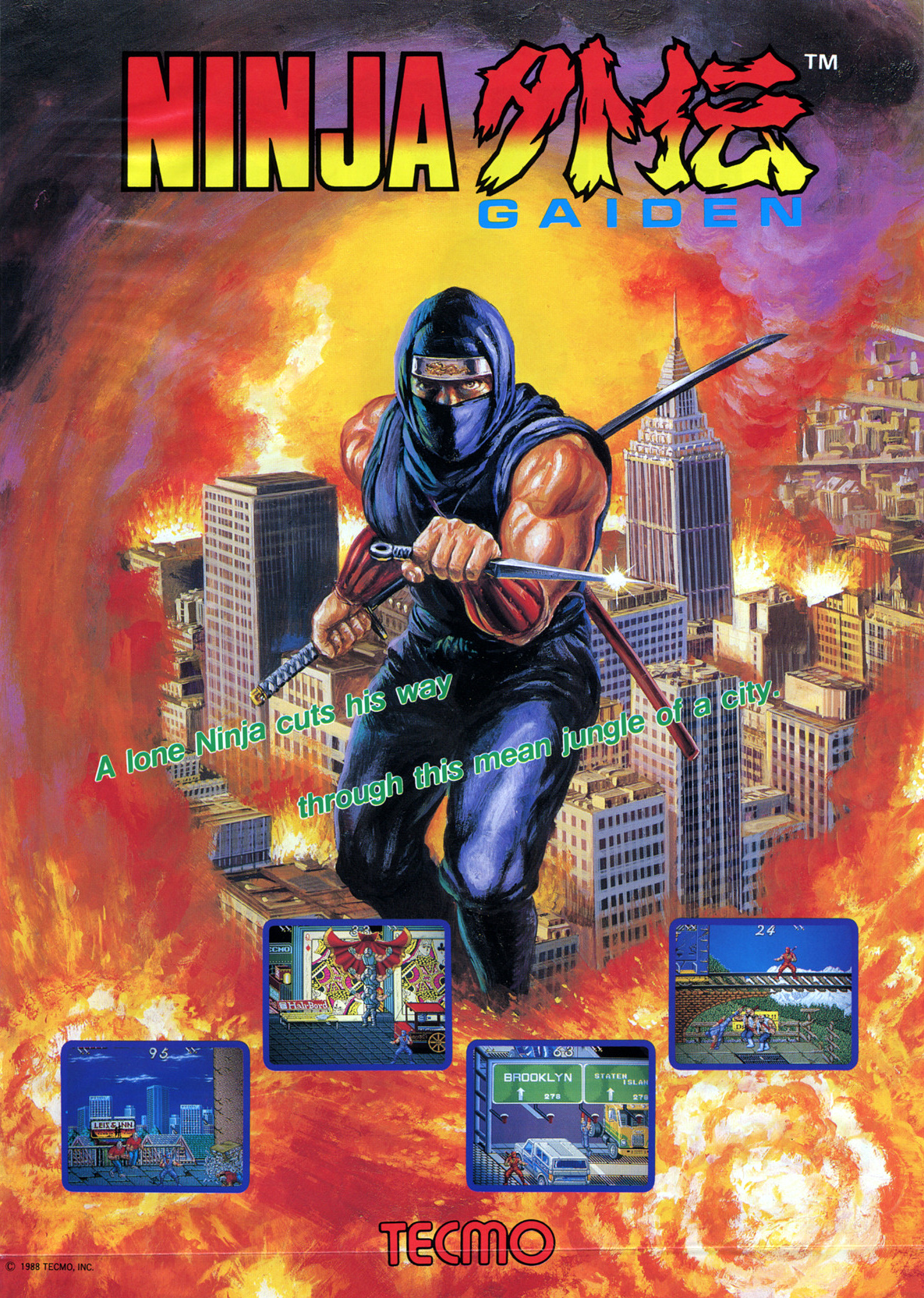
No, not the NES platformer. The arcade beat 'em up...
"Ninja Gaiden! Hai!" - Lee Arenberg, The Wizard, 1989
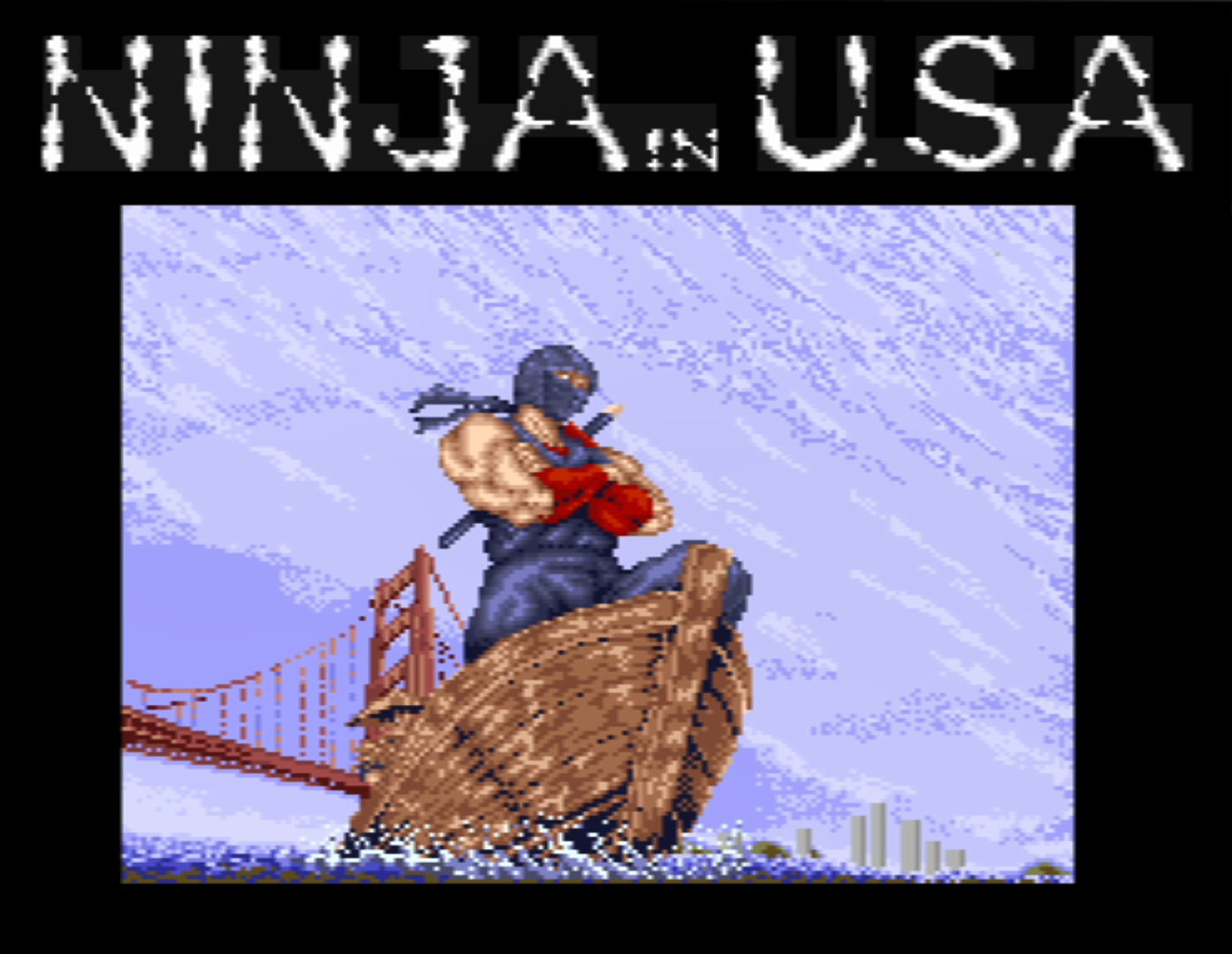
For those of us in Canada and abroad boycotting travel to the United States for obvious reasons (apologies to all nice Americans), there's a fun alternative to enjoying a slice of American pie without suffering indigestion; video games! Many titles, such as Rampage, Road Rash II, Cruis'n USA, Skitchin', Pilotwings 64, and Mickey's Speedway USA, all revolve around travelling across the United States. While each of these are fine choices, the game I'd like to discuss today is 1988's Ninja Gaiden...no, not the beloved NES platformer, but rather its lesser-known arcade beat 'em up cousin. While the NES version weaves a thrilling tale of mystery and revenge, the arcade version opts for a more comedic approach to its storytelling; "Ninja in USA," as pointed out in the opening cinematic featuring a Ninja sailing into San Francisco...aboard a rowboat.
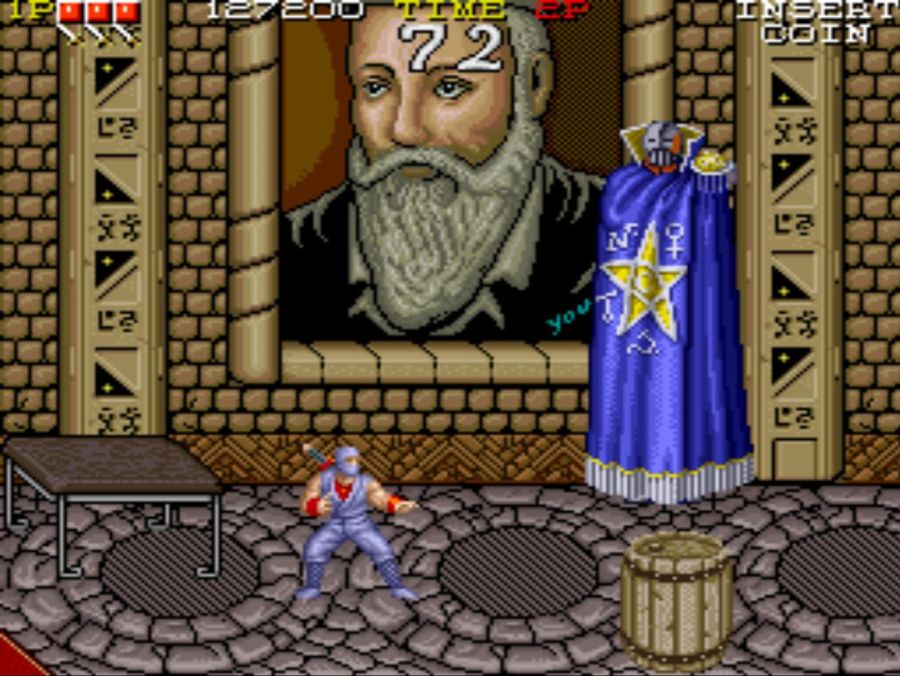
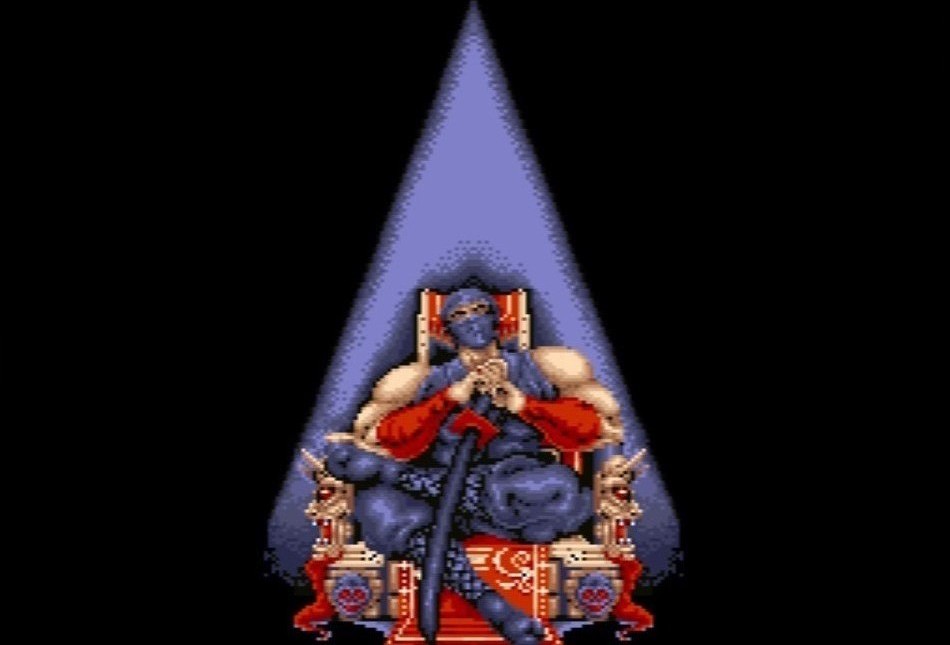
Set in the then-future year of 1999, the plot of Ninja Gaiden centres on an American cult of Nostradamus worshippers hell-bent on making the medieval seer's end of the world prophecy a reality. As nobody in the United States can handle this cult, a pair of Ninjas are dispatched from Tokyo to assassinate the cult's leader, Bladedamus, who just so happens to be a direct descendant of Nostradamus himself. However, Bladedamus isn't your everyday cult leader, but rather a muscular monstrosity in barely-there leather BDSM bondage attire. He bears a much stronger resemblance to He-Man than he does Nostradamus, if you ask me.
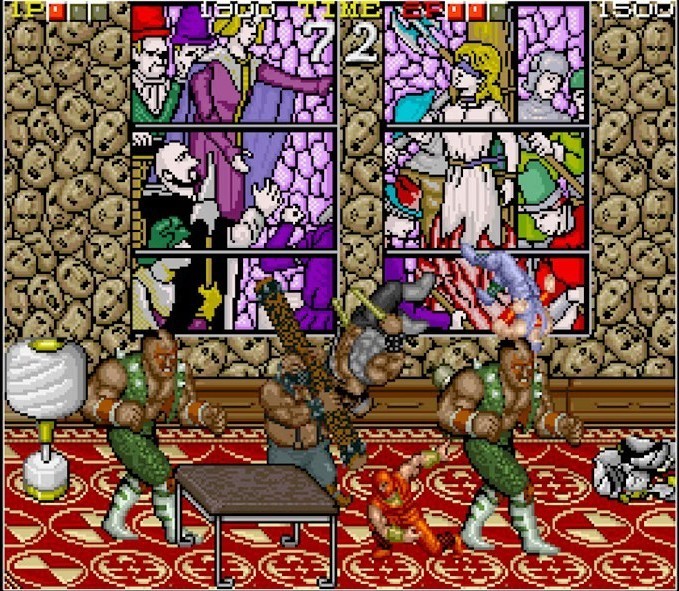
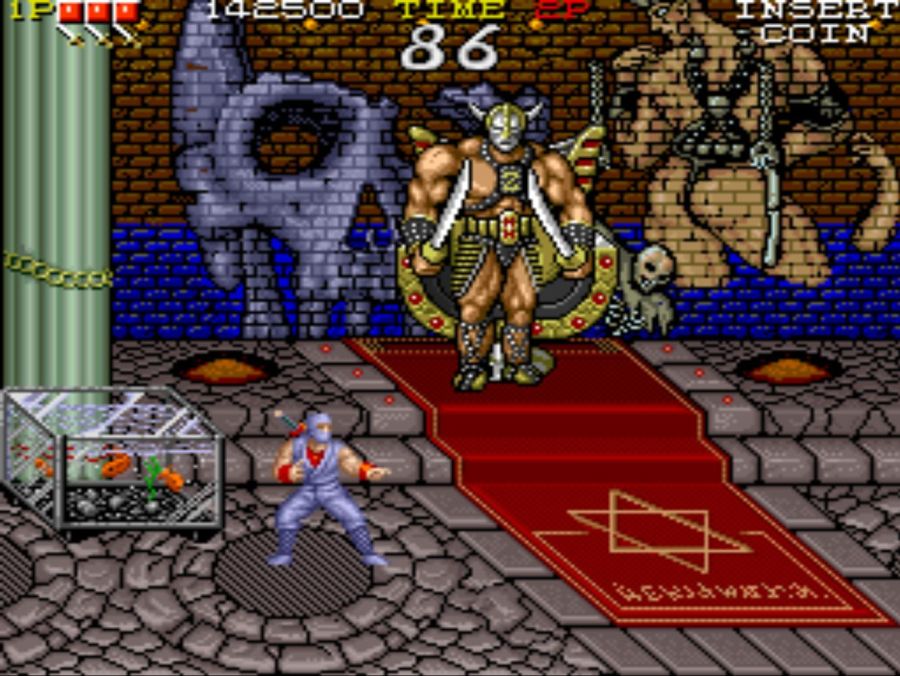
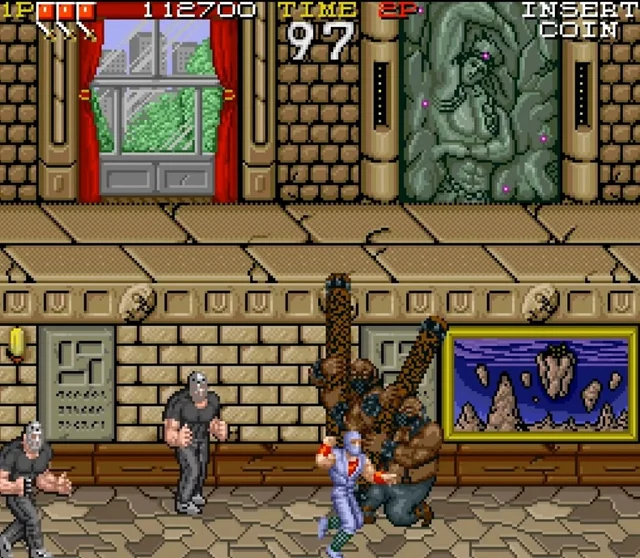
To earn their paycheques, the Ninjas must fight, flip, and fancy foot their way across the USA, facing off against hoards of Nostradamus cultists, such as rival ninjas, biker gangs, caber-wielding strongmen, Jason Voorhees cosplayers, and even a tag-team pair of WWF wrestlers. The Ninjas' itinerary includes San Francisco, New York City, Las Vegas, the Grand Canyon, the Rocky Mountains, and the Cult of Nostradamus. As with Dynamite Düx, Gekibo: Gekisha Boy, or EarthBound, the version of the United States seen in Ninja Gaiden is a parody facsimile, complete with gaudy billboard ads, graffiti-covered buildings, flashy neon signage, and several American landmarks.
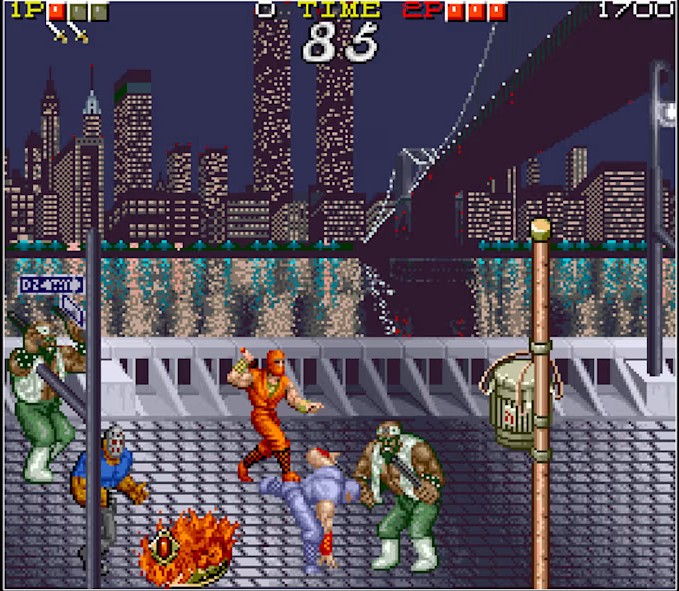
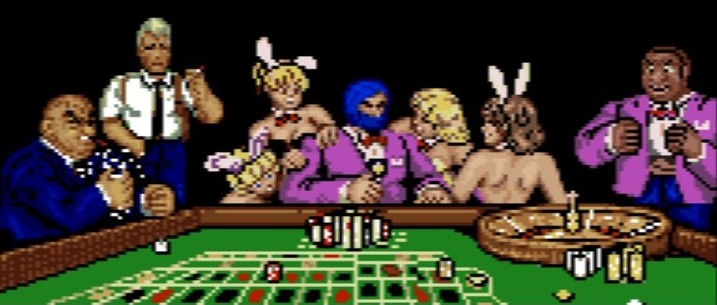
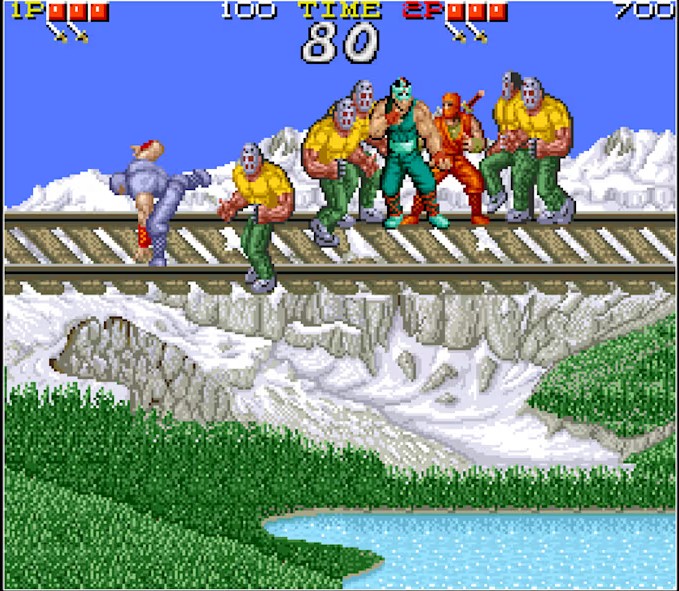
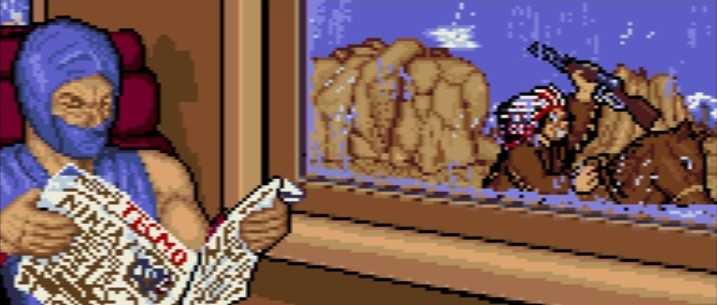
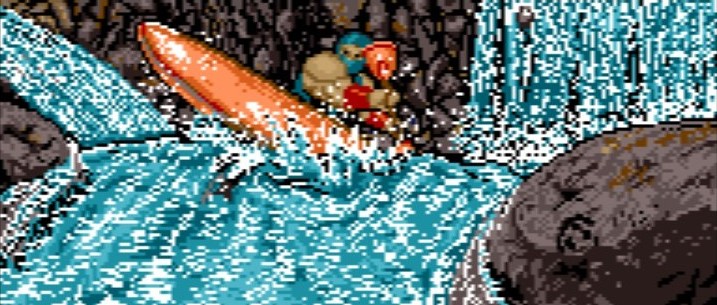
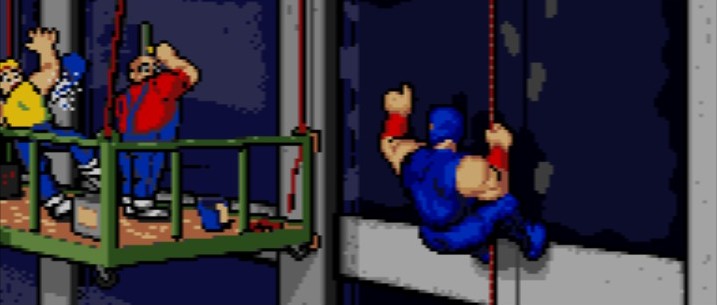
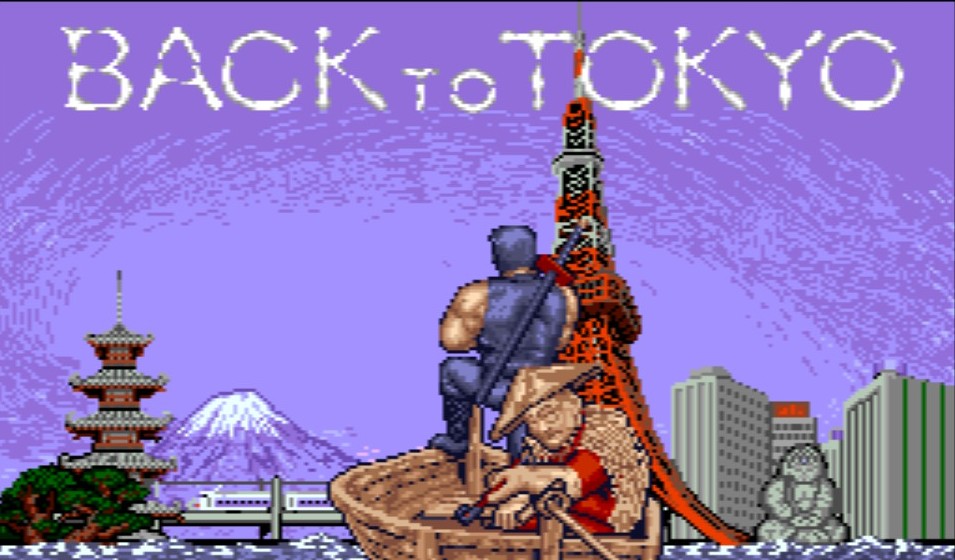
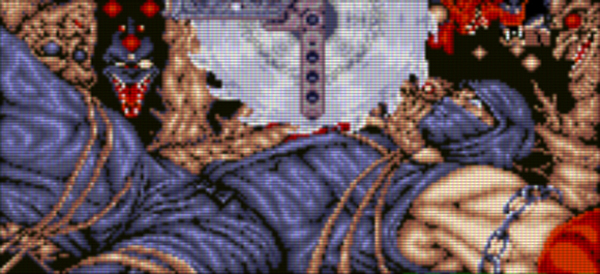
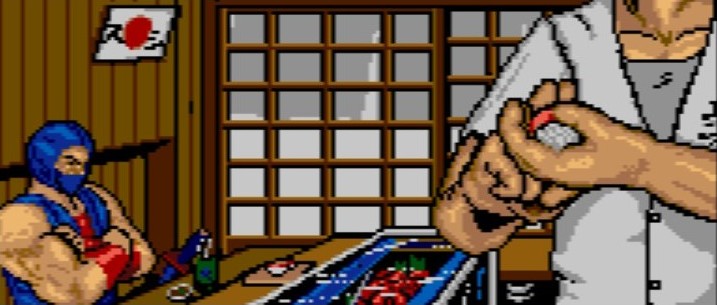
The Ninjas' six-leg American tour is chronicled via a series of short and silly cutscenes of the blue Ninja doing touristy things, such as dining at a restaurant, riding a train, gambling in a casino, kayaking down rapids, and greeting window washers while climbing up the side of an office building. Even the "continue" screen has its own cutscene, depicting the Ninja strapped to a James Bond-esque deathtrap with a buzz saw slowly descending upon his abdomen in dramatic fashion, as the seconds count down towards a, "Game over, man! Game over." The ending of Ninja Gaiden brings all these cutscenes full circle, with the Ninja sailing back home to Tokyo aboard his rowboat. Hmm, I guess the orange Ninja is the one snapping all these Polaroids?
In terms of gameplay, Ninja Gaiden is par for the course with other early beat 'em ups; two players can team up to take out waves of enemies, dodge environmental hazards, and pummel bosses. Power-ups include extra seconds on the timer, temporary samurai swords, health pick-ups, and additional lives. These are accessed by throwing enemies, or being thrown yourself, into destructible objects, such as wooden crates, oil drums, projecting signs, pole-mount transformers, telephone booths, and popcorn wagons. Given the ninja-theme, players can wall jump to get behind enemies, swing over traffic like a trapeze artist, or tightrope walk between buildings. A couple of handy moves in the Ninja's répertoire include clinging to pipes to kick away enemies and the ability to suplex them mid-somersault, which looks as cool as it sounds.
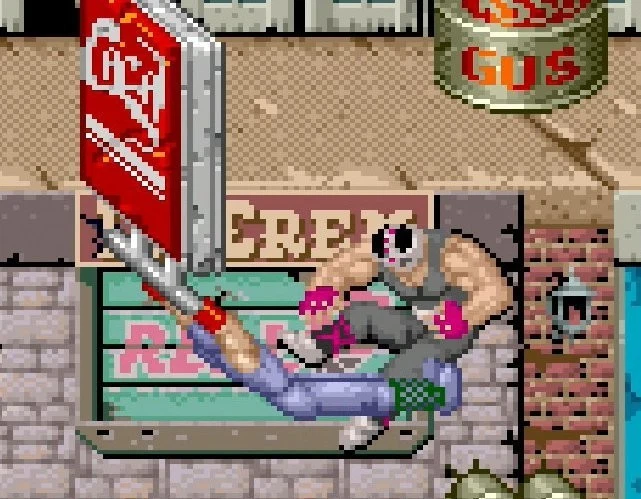
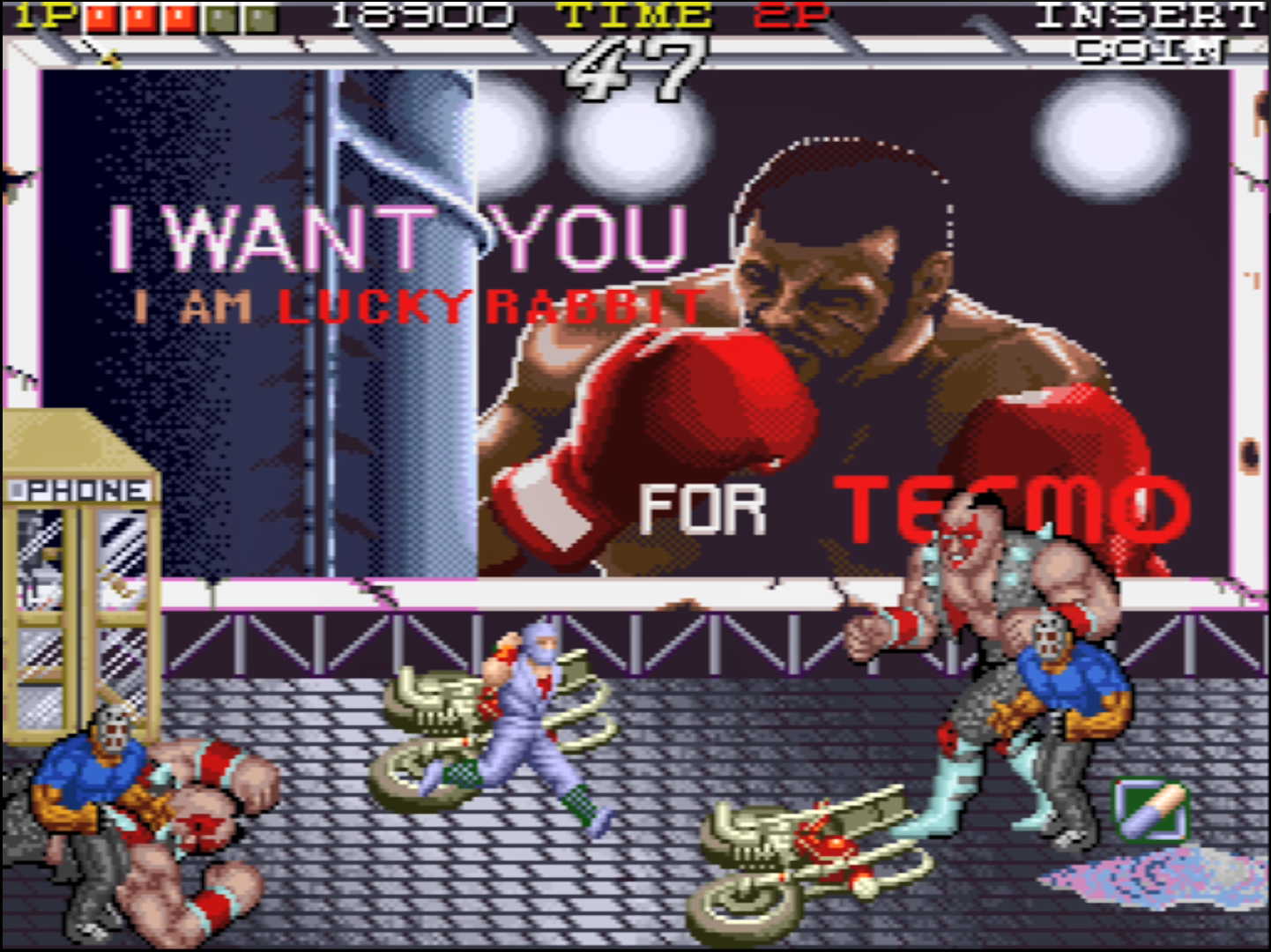
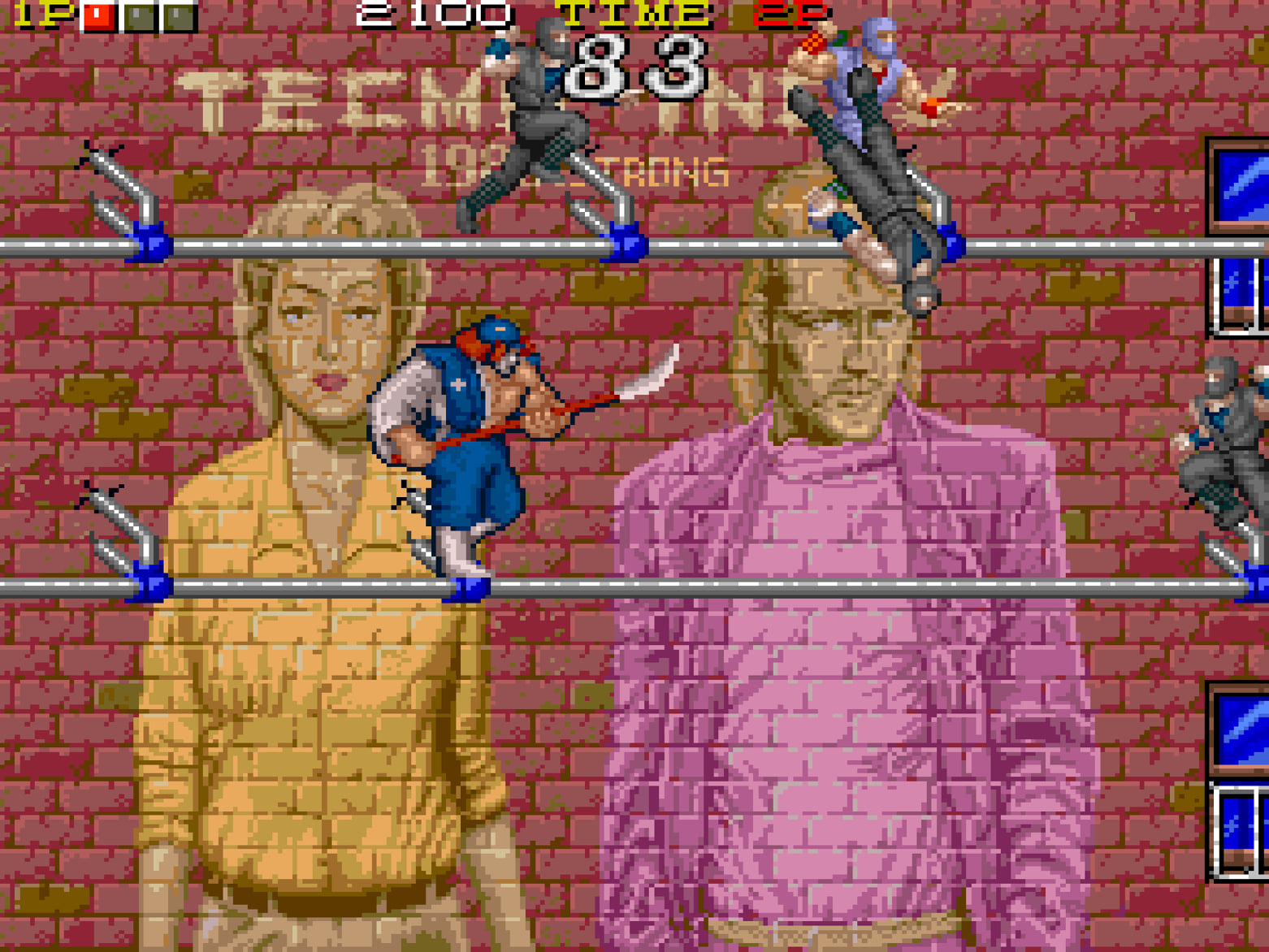
The game's flaws, common to this era of beat 'em ups, include cheap enemies who can land hits on you from further away than you can hit them, no screen-clearing attack or run button, and a checkpoint-based continue system that sends you back to an earlier point in the level and resets your high score to zero. As with fellow beat 'em ups, The Adventures of Bayou Billy and Streets of Rage 3, the North American version of Ninja Gaiden is significantly harder than the Japanese one. This was a common practice back in the day, done to deter players from beating console games rented at video stores. However, as Ninja Gaiden is an arcade game, I'm not sure why it was injected with this overdose of difficulty. To increase quarter profits at arcades, cinemas, and bowling alleys, perhaps? Do yourself a favour and stick with the much fairer Japanese version.
In closing, despite its flaws, Ninja Gaiden remains a fun and funny beat 'em up experience with pleasant visuals and catchy music. It offers a parodical look at the United States as seen from an outsider's perspective, so if you're boycotting travel to the United States but are still craving a small slice of their pie, hang out with the Ninjas! Do you have any thoughts on this post? If so, feel free to reach out by leaving a comment, dropping me a line, or signing my guestbook to share your opinions on this or any other topic. To receive the latest updates on my work or to directly interact with my content ("likes" or comments), follow me on Neocities. Also, feel free to press the "like" button if you enjoyed this post, as "likes" help me gauge audience interest in the content I post. After all, I don't want to bore anyone, ha-ha. Until next time, love, peace, and chicken grease!
Posted in "Nerd Alert" on Friday, August 1, 2025.